Vanati Group at the UN in Vienna: AI instead of infrastructure?
28 July 2025
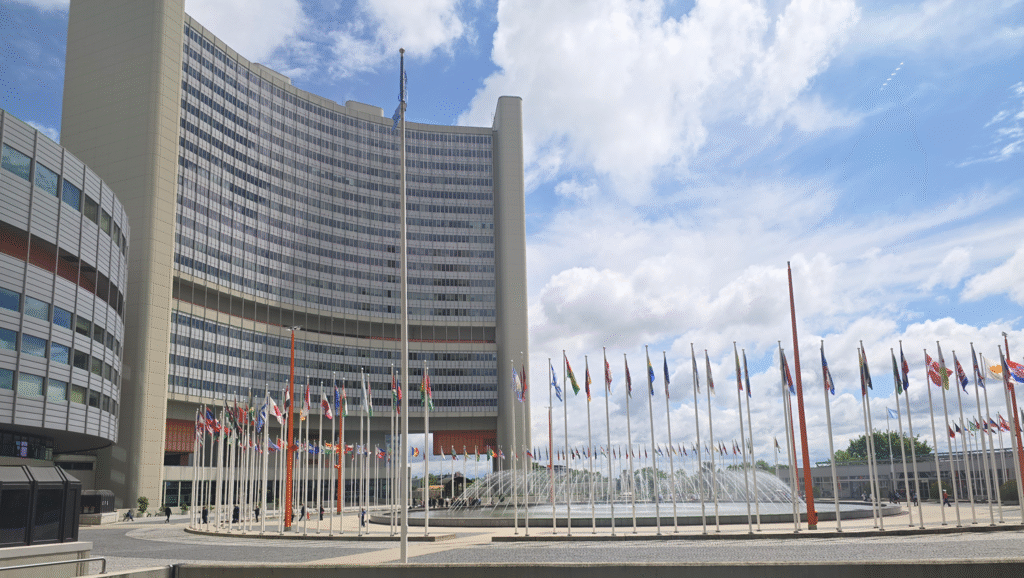
How should a developing country invest its limited resources — in traditional infrastructure or in modern technologies such as artificial intelligence? This essential question was at the centre of an international debate during the AI for Developing Countries Forum (AIFOD) Vienna Summit 2025, held in the UN building in Vienna. Among the high-level participants was Bejan Choschnau, Executive Member of Vanati Group.
AIFOD & Vanati Group: a shared mission for equitable technology development
The Vienna Summit of AIFOD (AI for Developing Countries Forum) is one of the leading global platforms addressing how AI technologies can strengthen developing countries. The conference brought together more than 600 decision-makers from over 80 countries to discuss concrete models for AI investment in the Global South.
As an invited speaker and representative of Vanati Group, Bejan Choschnau emphasised a central point in his “Infrastructure vs. Applications” panel:
“We need to move away from the idea that development has to take decades. With AI, we can achieve results in months — without huge construction projects.”
— Bejan Choschnau
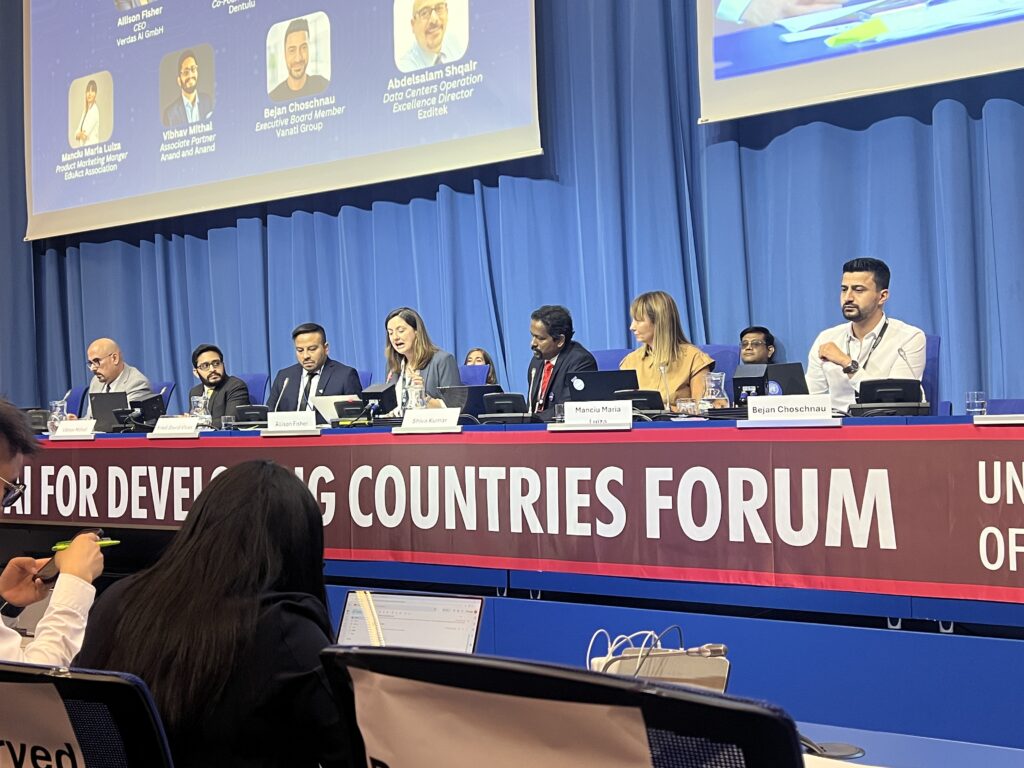
Choschnau made clear that modern cloud infrastructure, satellite internet (e.g. Starlink) and decentralised systems often make the construction of expensive local infrastructure unnecessary today — or at least substantially reduce its necessity.
Infrastructure versus AI: a question of time and impact
Choschnau argued that building traditional infrastructure in many developing countries can take up to ten years — a period during which technologies have already advanced dramatically:
“By the time a road or a network is built, it is already outdated. We live in a world where technological leaps happen in years, not decades.”
Instead, he advocated using modern cloud technologies, satellite internet (e.g. Starlink) and flexible AI solutions that can be implemented in a decentralised, rapid and resource-efficient manner.
AI is revolutionising healthcare in developing countries
A particularly striking example concerns healthcare. According to the United Nations, many developing countries have an average of just one doctor for every 5,000 people — a situation that costs lives.
Bejan Choschnau made clear:
“We cannot tell people to wait ten years for infrastructure to be built. We need solutions now — and artificial intelligence can provide them.”
The targeted use of AI technologies — for example in telemedical diagnosis, automated early detection or digital patient advice — can scale and democratise medical services.
Vanati Group is already working on several concepts to provide digital healthcare solutions in structurally disadvantaged regions — quickly, safely and effectively.
Interview with AIFOD (AI for Developing Countries) at the United Nations in Vienna
Rapidly scalable applications instead of slow megaprojects
Choschnau advocated a paradigm shift: rather than concentrating on traditional infrastructure, developing countries should target investment in scalable AI-powered applications with a direct impact — in healthcare, education, public administration and agriculture.
An international stage, a clear message
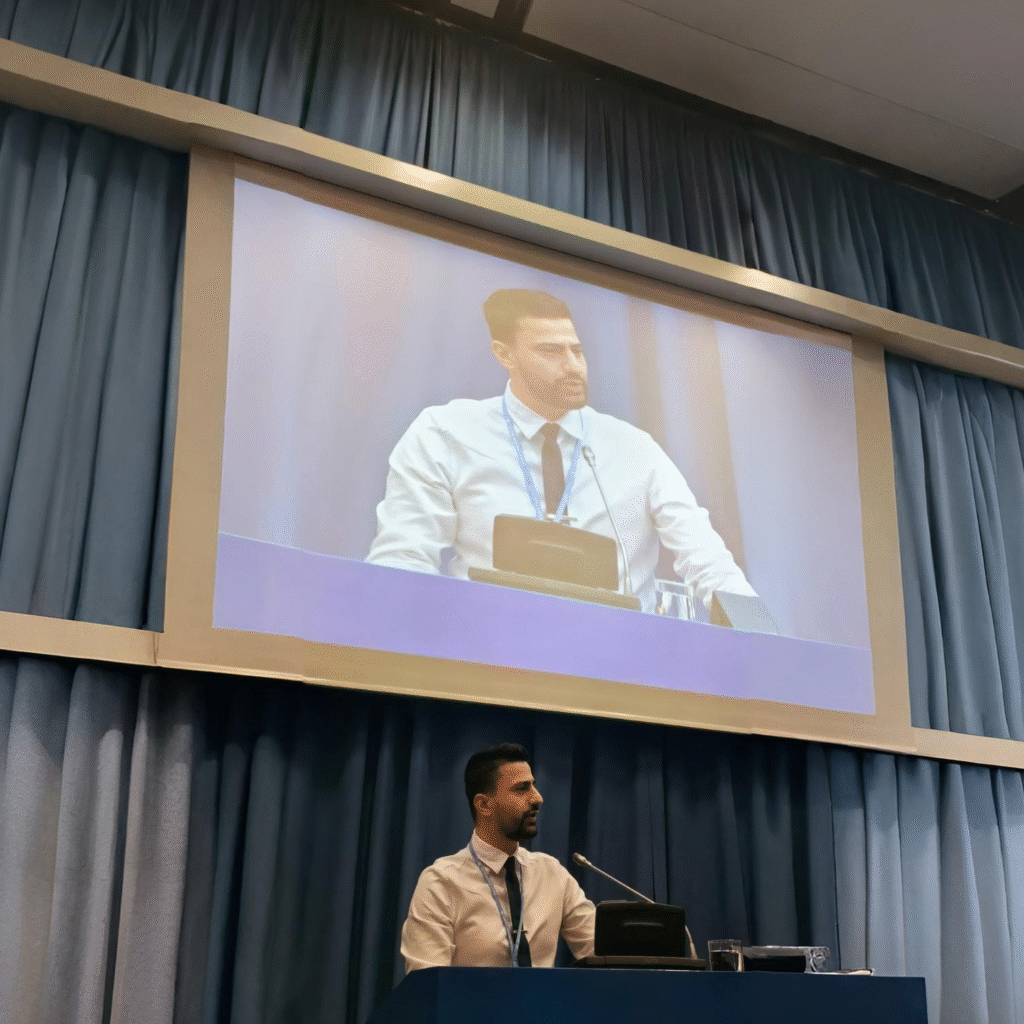
At the UN event, attended by experts from different countries and institutions, it became clear that the question is not either-or, but how intelligently developing countries prioritise their resources. Bejan Choschnau’s contribution attracted considerable attention because he brought not only technological expertise but also a deep understanding of economic realities and scalable impact in development contexts.
Vanati Group: shaping the future together
As an innovation partner at the intersection of AI, software and international development, Vanati Group follows a clear course: technology as a tool for sustainable impact rather than a prestige project. Bejan Choschnau’s appearance at the UN underlines this ambition and brings Vanati Group’s perspective to the international stage. His contribution to the debate attracted considerable attention because he brought not only technological expertise but also a deep understanding of economic realities and scalable impact in development contexts.